Start a “Sit Spot” practice to a happier you
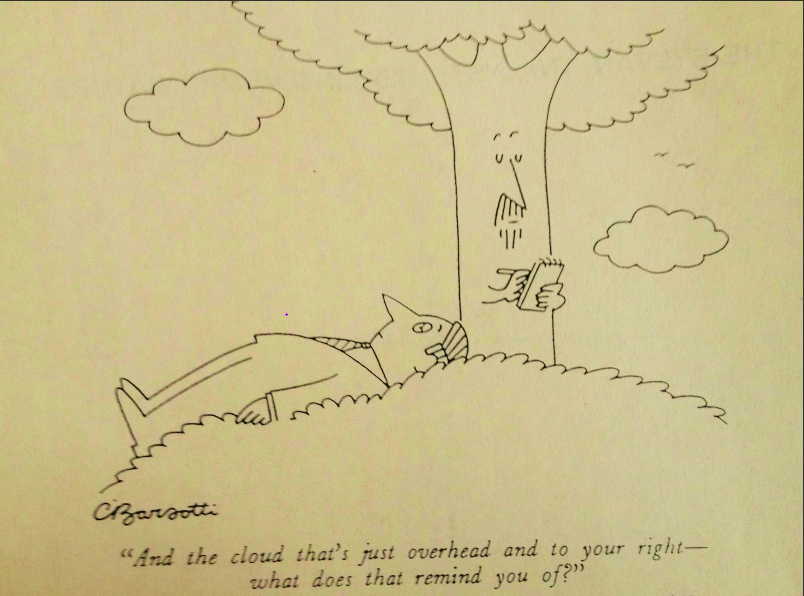
In today’s fast-paced world, many of us feel a deep need to reconnect with nature, as it’s essential to our sense of peace, happiness, and even purpose. Yet, as we rush through our busy lives in urban environments, we often find it difficult to carve out time for this connection. For many, sitting still for just a few minutes seems nearly impossible. This is where the practice of “Sit Spot” can be a simple, effective solution. What is a Sit Spot? A Sit Spot is your designated spot in nature where you can simply “be.” It’s a space to settle in, relax, and allow yourself to become fully present. Over time, you’ll find yourself more attuned to the sights, sounds, and movements of the natural world around you. This practice, used by poets, painters, yogis, and meditators for centuries, helps to strengthen your relationship to nature. By regularly visiting your Sit Spot, you begin to use our senses to become aware of how nature moves and acts around you. Simply sitting, breathing and tuning into the natural world is good for body, mind and spirit! The Benefits of Spending Time in Nature Research has shown that spending time in natural environments offers a wide range of benefits, from reduced blood pressure and a stronger immune system, to enhanced well-being and happiness. People who spend time outdoors tend to be healthier, more relaxed, and more content. We all know this on some level, but it’s easy to forget when we’re caught up in our daily routines. The challenge is to act on what we know and make time to reconnect with nature. One of the simplest and most effective ways to do this is by practicing “Sit Spot.” How to Practice Sit Spot The concept of Sit Spot is easy: find a quiet place outdoors—either in your own yard, a nearby park, or a natural area—and spend some time just sitting, breathing, and observing. No distractions, no phones—just you and nature. This practice has had a profound impact on my own mood, well-being, and sense of connectedness. For me, it’s become a regular ritual—a chance to step away from the noise of the world and take in the calm of the natural environment. It’s also been an essential part of my work as a Forest Therapy Guide, helping me stay grounded and attuned to the rhythms of nature. Finding Your Perfect Sit Spot When it comes to choosing your Sit Spot, the most important factor is that it should be easily accessible. Ideally, it should be a place you can visit regularly without much effort—somewhere close to your home or work. Your own garden, a quiet bench in a nearby park, or a secluded spot at a local woodland or urban forest are all excellent choices. Aim for a location that invites you to be present. While you might dream of sitting by a rushing creek or under a majestic tree, even a small garden can become a perfect Sit Spot. What to Look for in a Sit Spot When choosing your Sit Spot, consider the following natural features: Even in urban areas, nature is all around you. For instance, a quiet corner in the your local botanic gardens can serve as an ideal Sit Spot amidst the hustle of the city. The key is to find a place that allows you to observe and connect with nature—whether it’s through the movement of the wind, the chirping of birds, or the rustling of leaves. The Practice of Being Present When you settle into your Sit Spot, start by getting comfortable. Take a few deep breaths, relax your body, and greet yourself with kindness—this is your time to connect. Set an intention to truly engage with the natural world around you, and let go of any distractions. Turn your attention to your senses: what do you smell, hear, see, and feel? Pay close attention to the sounds of the birds, the temperature of the air on your skin, or the scent of the plants nearby. Let yourself fully experience these sensory details, allowing them to ground you in the present moment. Curiosity is key. Wonder about the small details around you, and let it be okay not to have all the answers. This practice isn’t about gathering knowledge, but about fostering a deeper connection with the environment. The goal is simply to be present, to observe, and to experience. As your time at the Sit Spot draws to a close, take a moment to reflect. You might want to journal your thoughts, sketch what you saw, or collect something to remind you of your time there. Finally, before you leave, take a moment to thank your Sit Spot. You can pause for a few extra moments, offer water to a nearby plant or tree, or leave a small gift for the local wildlife. This gesture acknowledges the space you’ve shared and the connection you’ve fostered during your time there. Stay Safe and Comfortable It’s important to feel safe and comfortable in your Sit Spot. Be mindful of any potential hazards, like bees, snakes, or unstable branches, but don’t let this stop you from finding your spot. When you feel secure, you can fully relax and enjoy the process. You may even find that your Sit Spot becomes a space where you can let go of tension—taking a brief nap or simply resting. An Experience for Life The beauty of the Sit Spot practice is that it’s adaptable to your lifestyle. You don’t have to spend hours at your spot every day—start with just 10 minutes and build from there. The more often you visit, the more you’ll notice and appreciate the subtle changes in the environment, from the shift in seasons to the daily rhythms of wildlife. If you have the time, consider finding a second, “wilder” Sit Spot for weekend visits, where you can immerse yourself in a more natural setting. Over time, these moments of quiet observation can deepen
Find a quiet place in nature and notice…
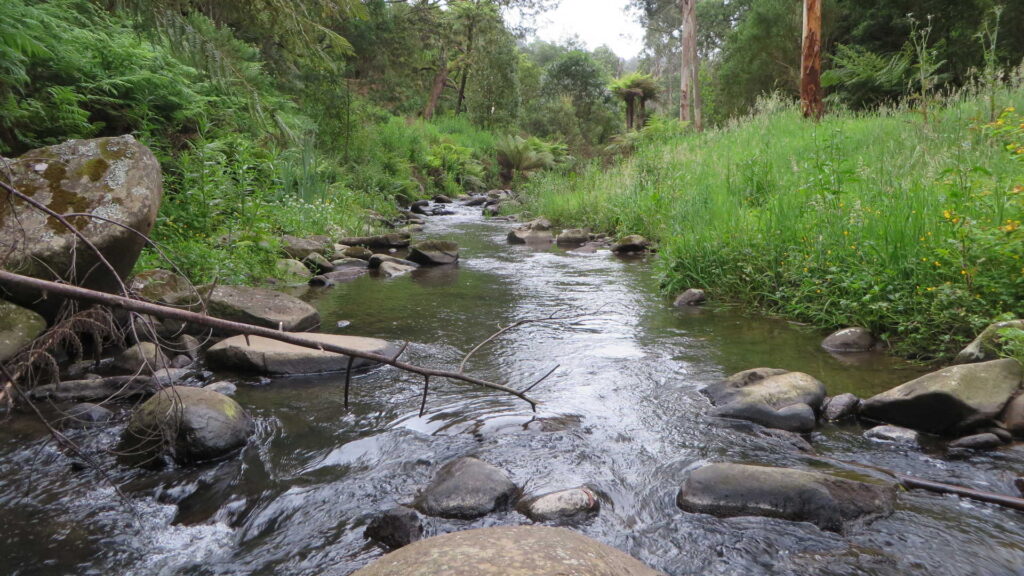
It’s now quiet. I notice a butterfly and another and another… vigorous flight over the tall grass alongside the creek.
Take a relaxing “Forest bathing” walk close to Melbourne – Toolangi
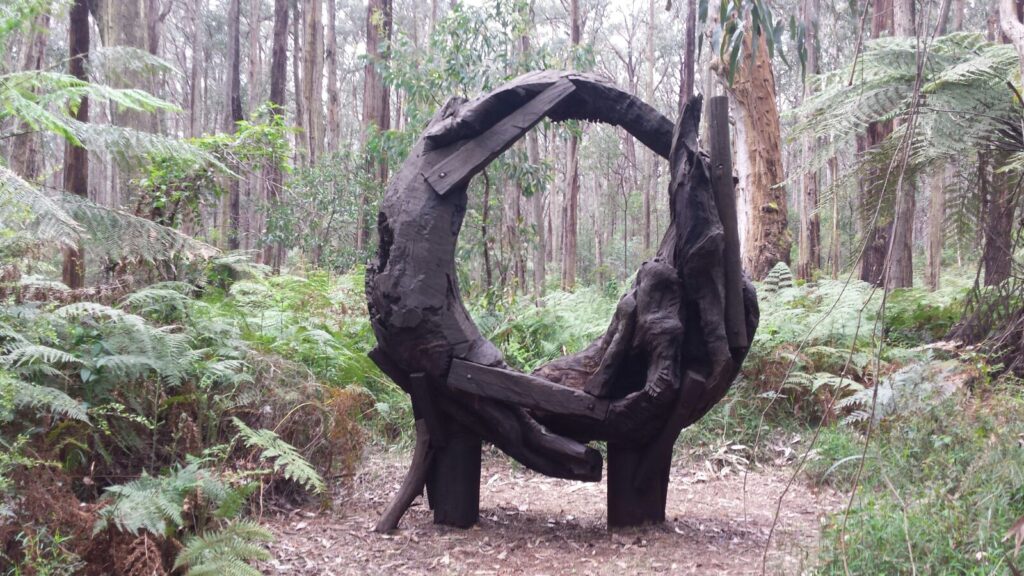
Every weekend, I check out the best spots in close proximity to Melbourne for stressed-out city dwellers to escape to and experience forest bathing or ‘taking in the medicine of the forest’. Recently, as I drove through the beautiful Yarra Valley with my friend Richard, I realized how lucky we Melbournians are to have such lush forests in close proximity to the city. Forest like these offer a wonderful healing experience – if only we visit more often! And I’ve picked up some interesting facts to share: To experience a very relaxing and healing forest bathing experience, I would recommend parking at the Forest Discovery Center, and stepping inside to see the lovely works of art inspired by nature. Switch off your mobile ☺. Then, step outside for a gentle stroll around the Toolangi Sculpture Trail. Stop to admire and read the history and story behind each ephemeral and permanent sculpture that reflects the artist’s environmental concerns and explorations of nature. The Yea River Walk opposite the center is ideal for a real forest immersion experience. It is an easy one-hour walk which passes through Messmate, Narrow Leafed Peppermint, Mountain Grey Gum forest and Mountain Ash forest. The Yea River is full of aquatic life including platypus and many fish species. The viewing platform provides an excellent vantage point to see the river. It’s so relaxing to walk at Toolangi State Forest. If you need to de-stress, get away from the hustle and bustle of Melbourne CBD or just need some time out to relax, please join me for a guided Forest Bathing Walk at the Toolangi Forest. If you like, please have a look when next we offer a guided walk at this magnificent and healthy natural environment and other locations close to Melbourne.
A rainy day in summer
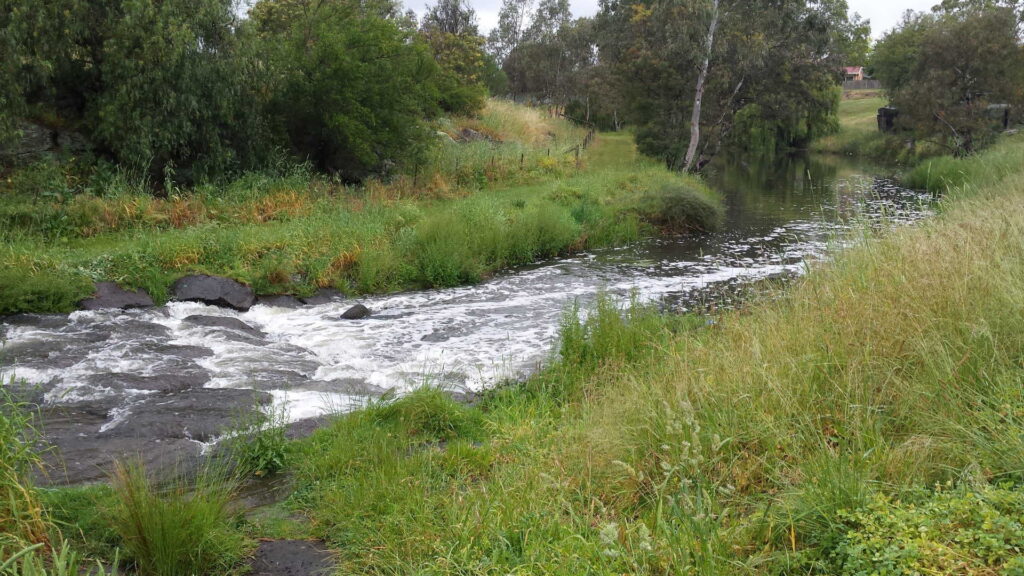
Last night a huge thunderstorm swept across Melbourne. As showers continued into the day, I decided to go to my sit spot. The little purple flowers were drenched in rain, the droplets glistening as they held on to the stems. The streams were full again, ducks happily swam along the creek.As I walked across the grass path, I saw this little flower. A lonely flower, a beauty in lilac with drops of rain on its delicate petals. It reminded me of a poem I once read online: Another day, another hourUntil I walk past a lonely flower.I stare at its beauty and its graceThat’s when I realize, I slowed my pace.The flower enjoys the wind and sunLets itself be, and defined by no one.It takes each day as it comes and goesProud to display what it has to show.Thankful for the sunlight of every dayand open to acceptance of the harsh rain. As I walk along the creek, I breathe in the strong scent of the earth and the eucalyptus trees. This smell inspired two Australian scientists to coin the word “petrichor”. It’s a beautiful word to suggest that humans inherited an affection for the smell from ancestors who relied on rainy weather for their survival. The rain reminds me that everything, every living thing on Earth, needs water to survive. I hope it rains every now and then in summer.
Little Raven
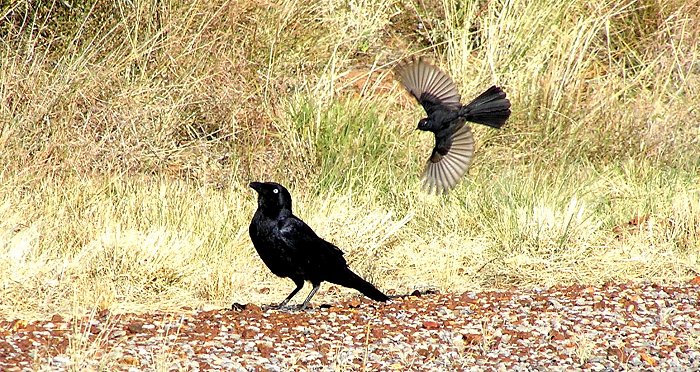
I am bothered by this noisy little thing fluttering around me. Its mate now joins in to pester me. I am four times their size, but they persist. All I want is to pick at this this tree, hoping to find something tasty for dinner. But they will not stop. Now this woman passes by. At first she looks concerned. Maybe she thinks I’m attacking their nest. But, as she moves closer, she realizes I’m just pecking at the wood, trying to get this grub. She stands and watches in amusement. Well, I’m not amused. I am too tired to fly. I just walk across the pathway, trying to avoid this persistent pest of a bird. The woman is still watching. She seems concerned; ‘why doesn’t the raven just fly away?’ Yes, I’ve had enough. I need my peace and quiet.
Forest Therapy: A mindful walk in the woods to de-stress
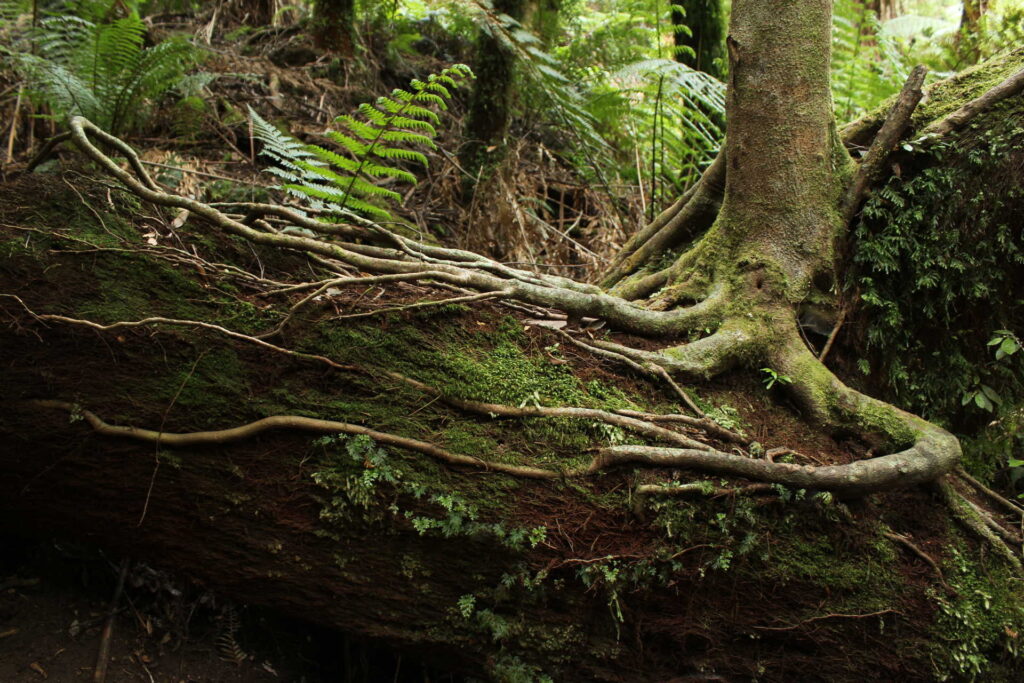
On a cold and gloomy Sunday morning, my group of friends stood in a circle under a gum tree, looking at me with slight curiosity. I had led many hikes with them in various beautiful places in Victoria. But Forest Therapy? In my introduction, I explained that Forest Therapy derives from the Japanese “Shinrin-yoku;” the practice of taking luxurious walks in forested areas for the purpose of enhancing health, wellness, and happiness. This way of mobile meditation has been recognized officially by the Japanese Government since the 1980s and its benefits continue to be studied around the world. Although we are inspired by the Japanese practice, our use of the terms “Forest Therapy” and Shinrin-yoku” do not mean to follow a specifically Japanese practice. Rather, we mean spending time in nature in a way that invites healing interactions. There is a long tradition of this in many cultures throughout the world. Learn to let the land and its messages penetrate into your mind and heart more deeply Evidence-based benefits Studies have found that when people strolled through a wooded area, their feelings of stress, anxiety or anger had decreased and levels of the stress hormone cortisol plummeted almost 16 percent more than when they walked in an urban environment. Even after just 15 minutes of walking, subjects’ blood pressure showed a marked improvement. Yet, one of the biggest benefits may derive from breathing so-called phytoncides, antimicrobial substances emitted by trees and plants. Women who spent two to four hours in a forest on two consecutive days saw a dramatic reduction of stress hormones, and a nearly 40 percent surge in the activity of cancer-fighting white blood cells. Unsurprisingly, research has also shown that the emotions of pleasure and happiness are elevated during these walks. Why do I need a Guide to experience these benefits? One of the easiest ways to benefit from the medicine of the forest is simply taking a contemplative walk through the woods to reconnect with nature. Studies have shown that this leads to decreased stress, natural mood elevation, improved perceptions of energy or vigor and even a stronger immune system. Isn’t this is just confirming what we all intuitively know? Get outside, engage with nature and you will feel healthier and more connected? Yes and no! As an experienced hiker, I have a noticeable improvement in my wellbeing when out on a hike. I feel less stressed, get sick less often, and find a spiritual calm that keeps my optimism brimming through the seasons. However, I derive many more benefits during a forest therapy guided walk by learning “how to be present”, how to slow down in nature and really engage my senses. I practice regularly how to interact mindfully with nature, through specific activities and other core routines which are designed deliberately to slow us down and widen our senses. Consequently, I began to develop a reciprocal relationship with the forest. I have never felt happier, more positive and alive! This is where the real magic happens. Slowing down in a natural setting, and being guided derives the maximum and long-lasting benefits. Being led by an INFTA-Certfied Forest Therapy Guide has been documented to lower stress and blood pressure levels, impart a sharper cognitive focus, lessen depression all while boosting one’s immune system for weeks after. The benefits of a guided walk We all experience a ‘nature connection’ at some point in our lives. But as our ‘busyness’ gets in the way, how do we recalibrate the senses and refresh from the effects of our digital lives and an overabundance of screen time? The practice of Shinrin-yoku has a specific intention to connect with nature in a healing way to deepen our relationship with nature, and in the exchange of health benefits between humans and the more-than-human-world. The benefits of these contemplative walks and reconnecting with nature in forests have been medically researched for many years. A guided walk helps participants to slow down and open their senses. You perceive more deeply the nuances of the constant stream of communications rampant in any natural setting. You will also learn to let the land and its messages penetrate into our minds and hearts more deeply. Forest Therapy guided walks are suited to anybody, irrespective of age or physicality. The gentle, slow walks of no more than one or two kilometers on even, flat surfaces, offer a simple remedy for stress, letting go of time and busyness. The walk takes about three hours, with no more than a dozen people, culminating – just like in the original Japanese tradition – with a tea ceremony. The language of the Shinrin-yoku guided walk is open, inviting and gentle. We all experience nature in a myriad of ways, and these walks allow us to leave our structured, hurried, directed everyday life to make deeper and more meaningful connections through nature with ourselves. Walkers develop a deeper sense of relationship to nature just from taking time to notice what’s around. It’s all about letting go the busyness of life, taking time to notice all the living beings around; how the sunlight falls on a petal, listening to a flowing creek, or the pleasure of wind against your skin. Little effort is required towards a cognitive experience throughout the walk – the door is rather opened to experience nature in a vivid, pleasurable, calming way. When can I join a guided Forest Therapy walk close to Melbourne? A whole series of Shinrin-yoku guided walks will begin in the New Year. Please, check our Facebook page for the latest updates! I invite you to join me to get outdoors and experience the wonderful feeling of being present in nature. To enjoy “bush time” in our magnificent forests. To explore Shinrin-yoku. To take time to listen, breathe, be quiet and still. To enjoy the benefits of bonding in nature, together.
If you ever feel lost, find yourself in nature
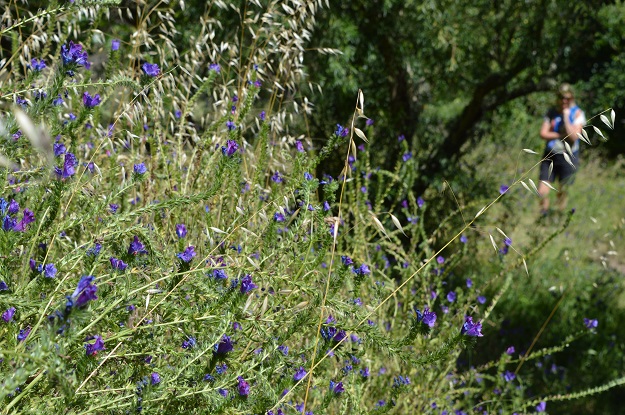
I have found ‘nature’ to be one of the common denominators in people’s healing journey. Physical healing aside, the natural world is where we have always gone in times of celebration and grief. It’s a place to find peace and wisdom. We all know intuitively that nature provides healing, refuge, peace and clarity. Is this what we now refer to as “forest therapy?” A therapy that has no known negative side effects and is readily available, in all seasons? A prescription for ails of the body and mind? A nature connection that improves cognitive functioning, lowers blood pressure and reduces stress? A forest therapy guided walk opens the door to many of these benefits and more! As a guide, I will help you find your way back to yourself, through the healing power of mindful connection to nature. It’s about being “present” and looking beyond the surface, since looking deeply makes for a more connected and grateful life. Leave the stress behind and just Breathe! Relax. Feel good. Listen. Simply Notice… What to expect on a forest therapy guided walk A Forest Bathing/Shinrin-yoku walk takes 2 to 3 hours and covers no more than a kilometer over easy, flat surfaces. I will help you slow down, awaken your senses, ditch the phone, and restore your relationship with yourself, the land and really immerse in the ‘atmosphere of the forest.’ You do not have to effort, rather be invited to a pleasurable and soothing experience. I draw upon mindfulness practices, and the techniques of deep nature connection mentoring. It takes 20 to 30 minutes for the body and mind to settle into new surroundings. As a guide, I select only the most comfortable, gentle walking paths and healing forests so that you will experience nature in a mindful and present way. Our practice helps you become aware of your senses. To really slow down. You are invited to be more gentle with yourself and receive all that nature has to offer. Join me on a guided walk Get re-introduced to nature in a way that is supportive and engaging. Allow yourself to receive your own unique experience with the earth. As your guide, I will hold a safe non-judgemental space to help you open up to experience all that is going on around you. Even new senses which you will soon discover. Join me on a guided walk with a small group. Or call me for a one-on-one private walk. I will be grateful for the experience to introduce you to nature. Each of us is bound to nature by invisible threads. At the end of the day, we come out into nature not because science says it does something to us, but because of how it makes us feel.
Unexpected encounter with nature!
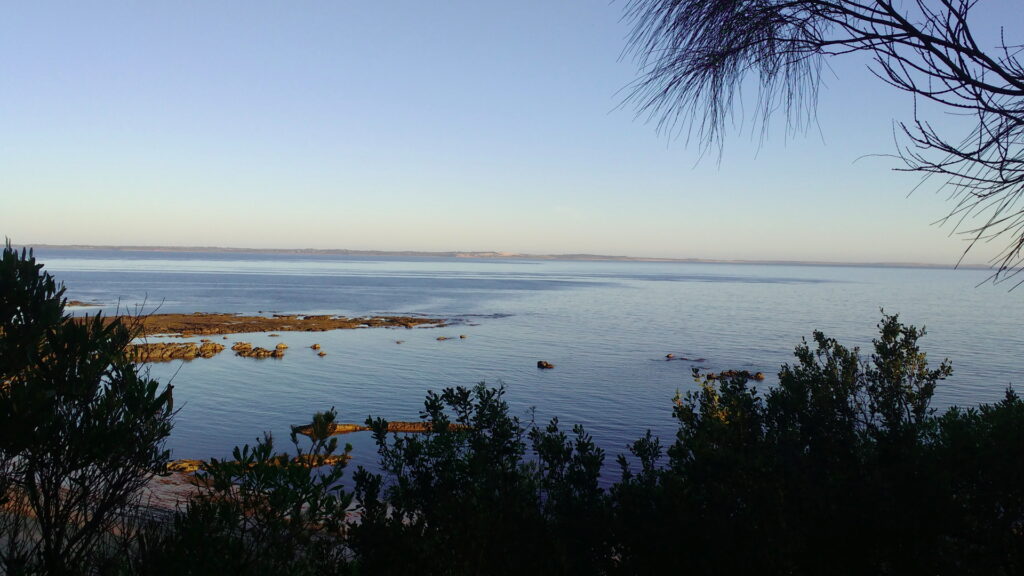
I was walking along the beach on a beautiful summer day, just breathing in the salty air, frolicking barefoot in the seaweed that had heaped up along the shoreline in the last storm. The sea was quiet and calm, just a gentle hint of movement as a light breeze drifted across the steel blue water. From the corner of my eye I noticed movement in the distance. A fin. A shark?! I stopped in my tracks. A few minutes later they were playfully circling around us: two dolphins. I found myself waist deep in the sea, savoring every magical moment. Have you ever noticed the kindness in a dolphin’s eyes? Or seen them smile as they poke their snouts out of the water?! I wonder if the dolphins had a message for me? My sense is that they may have come to give me their blessings on my journey as a Forest Therapy Guide. Did my experience remind you of a close encounter with nature?
Fragrance from the Forest
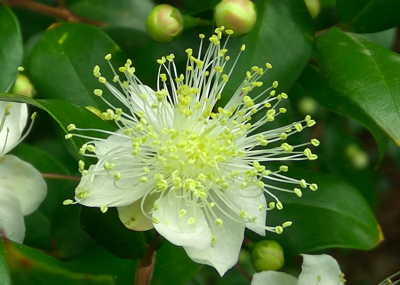
Fragrance from the Forest Have you ever spent time outside in nature and discovered that the scent of nature brought back a memory? Plant fragrances play a significant, yet often subtle, role in our appreciation of the outdoors. While roots and bark emit some aromas, most fragrance is found in plant flowers and leaves (e.g. eucalypts) and might be released into the atmosphere on hot days or with heavy rain (Elliot 1996). “It is not so much for its beauty that the forest makes a claim upon men’s hearts, as for that subtle something, that quality of air that emanation from old trees, that so wonderfully changes and renews a weary spirit.” ~ Robert Louis Stevenson Our weary spirit caused, in part by “techno-stress” and urbanization, has led to a society which is stressed and disconnected from the soothing effects of nature (Miyazaki et al. 2014) also known as Vitamin N (Louv 2016). Nature reconnection practices, which encourage improved lifestyle choices and better mental health in urbanized societies, include, but are not limited to, forest therapy, wilderness therapy and outdoor meditation (Liebeck 2016) and address the mental, physical, emotional, social, spiritual and environmental factors of human wellbeing (Pierce 2010). Forest Therapy, under the umbrella of nature or ecotherapy has existed in Japan since the Forest Agency of Japan promoted Shinrin-yoku (“forest bathing” or “luxuriating in the forest atmosphere”) as a practice for healthy living and part of a “forest therapy” program (Ikei 2014). Forests often deliver large amounts of olfactory-provoking chemicals, identified as phytoncides. Phytoncides are secondary metabolites produced by plants (such as cypress) and are closely related to essential oils (Li et al. 2006) which are likely to have a number of functions in plants including defense, helping with pollination, protection, allelopathy and antitranspirant activity. A guided Forest Therapy walk is likely to include natural aromatherapy and the inhalation of phytoncides. Inhalation of phytoncides consisting of tree antimicrobial volatile organic compounds such as α-pinene (which is found in eucalypts) and limonene (Li et al. 2006 and Halter 2018) can contribute to decreased stress, balance mental outlook (Selhub & Logan 2012) and improve immunity (Li et al. 2006). When next you are outdoors bathe in the fragrance of the trees and in addition, follow these 10 nature-inspired practices to de-stress. “The fragrance with which one is feasted in the woods is, like music, derived from a thousand untraceable sources…the whole air vibrates with myriad voices blended that we cannot analyze. So also we breathe the fragrant violets, the rosiny pine and spicy fir, the rich invigorating aroma of plushy bogs in which a thousand herbs are soaked …” ~ John Muir References:Elliot, G. (1996). Fragrance in the Garden. Australian Plants online. Retrieved 16 January, 2019. http://anpsa.org.au/APOL2/jun96-1.htmlHalter, R., (2018). Nature’s Wellness Science – Big Trees. Retrieved 17 January, 2019 https://www.slantedonline.com/natures-wellness-science-big-trees/Ikei, H., Komatsu, M., Song, C., Himoro, E., & Miyazaki, Y. (2014). The physiological and psychological relaxing effects of viewing rose flowers in office workers. Journal of Physiological Anthropology, 33:6.Li, Q., Nakadai, A., Matsushima, H., Miyazaki, Y., Krensky, A.M., Kawada, T., & Morimoto, K. (2006). Phytoncides (wood essential oils) induce human natural killer cell activity. Immunopharmacology and Immunotoxicology, 28(2): 319-333.Liebeck, C. (2016). Alternative Healing, A Walk in the Forest. Pulitzer Center on Crisis Reporting. Retrieved on March 10, 2018 from https://pulitzercenter.org/reporting/alternative-healing-walk-forestLouv, R. (2016). Vitamin N: The essential guide to a nature-rich life. Algonquin Books, New York.Miyazaki, Y., Ikei, H., Song, C. (2014). Forest medicine research in Japan. Nihon Eiseigaku Zasshi, 69(2), 122-35.Pierce, G. (2010). Ecotherapy, health counseling: application and theory. Nelson Education Ltd. Ontario, Canada.Selhub, E.M., & Logan, A.C. (2012). Your brain on nature: the science of nature’s influence on your health, happiness, and vitality. Harper Collins, California. Text and Photograph Copyright© 2019 Debbie EarlyDebbie Early, PhD is a certified clinical aromatherapist and certified forest therapy guide. She can be reached at myfragrantgarden@yahoo.com
Slower, Simpler, Nature
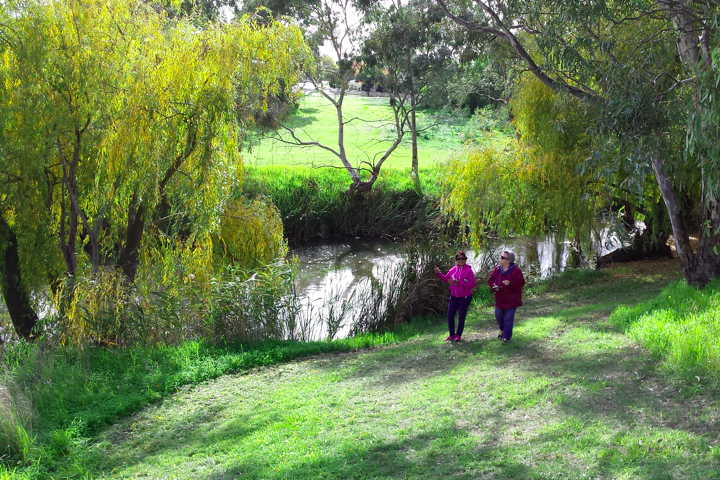
I haven’t always managed my stress and more than not ignored the signs that my mind and body were trying to warn me about until I was completely depleted and burnt out. My job at the time was all consuming, I gave 110% to my special needs students and work colleagues. After work and on weekends were not down time, they were spent making resources, doing research, planning lessons, giving to my family along with the general household chores that we all have to do. I would literally push through the fatigue and just keep going. It got to the point where something had to give and it was my health and wellbeing that fall apart. So after a lot and I do mean a lot ( over 18 months) of deep thinking and soul searching, I made the decision to resign from my job, a job I absolutely loved but I had nothing left to give and I had to do it for my over all health and wellbeing. That’s when I allowed nature in and it changed my life. My Husband and sons gave me a puppy for my 50th birthday. I started taking her for little walks around our property and as she grew bigger and stronger we started going for longer walks in the nature reserve behind our property. At first I would rush through the walk with Ivy with my head still on the tasks I wanted to do and wasn’t doing at home. It wasn’t really enjoyable for either of us. So…… I started to make a conscious effort to slow the walk down, to take notice of my surroundings and focus on the present moment of what I could see, what I could hear, what I could smell. The first thing that really stood out was all the different shades of green, from bright lime green to a deep olive green, so many shades. Then it was the leaves on the plants and those that had fallen to the ground. So many different shapes, sizes and colours. Our walk each day became a time of mindfulness and calm. I not only looked forward to this each day, my wellbeing craved it. To be outside has become a need. I feel its calming influence, its healing power and notice when I haven’t spent enough time out there. As I write this I’m sitting under a big Callistemon ( Bottle Brush) tree that I planted as a seedling over 30 years ago. My bare feet are resting on the grass and I can hear the breeze rustling the leaves of the trees, various bird calling out to each other. The odd Cicada is clicking away and the tinkling of some wind chimes can be heard. Just the simple act of sitting outside, taking off my shoes and connecting with the earth makes such a positive impact. Nature always continues to offer new things to notice as the seasons change, from the changing of colours, the smell of the first rains to the beautiful wildflowers at Springtime. We have recently purchased a coastal property which was a dream of mine. I’ve always loved the beach and its a sanctuary for me. To walk along the waters edge, sink my feet deep into the sand, listen to the sounds of the waves, feel that fresh sea breeze on my face just fills my soul. Again noticing what I can see, hear, smell, taste and touch. Standing at the waters edge as the waves wash in and out over my feet is such a healing ritual. My name is Tania, I live in the Perth Hills in Western Australia on a 5 acre tree filled property. I’m the owner of Wild Ivy Child Collective and Seaglass and Sol Coastal Retreat, both nature based small businesses promoting wellbeing and a slower, simpler life. I’m a Mum to two grown up sons and Grandma to our gorgeous little Grandson. Both my Husband and a Son run their businesses from home, so life can still be crazy busy but nature is always their to remind us to take a break, sit out in the garden to have that morning cup of coffee, take the dog on a bush walk, dip those feet into the ocean, walk barefoot on the lawn while you water the garden, get out and plant something. Be still, stop and just listen to the sounds around you and make it a part of your daily life. Slow down, keep it simple, get back to nature, live intentionally. Written byTania ScottSlower~Simpler~NatureFor every Wild Child regardless of age.wildivychild.com.au