Finding joy and calm
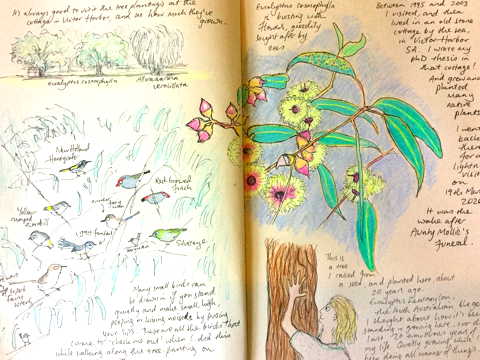
The earth seems to be shifting under our feet. Nothing seems certain, and it’s easy to let our anxieties and fears grow. That is, if we focus on human affairs only. Because out there, in nature, the world is going on. Lives are born and lives end. Trees that are already hundreds of years old, they keep steadily growing. Millions of small dramas, small wonders, and daily miracles are happening all around us. We just need to slow down, bring ourselves into the present, and open our senses. But this can be hard. A thousand worries and tasks clamouring for our attention. Perhaps an internal monologue of fear, or even doom. Some people feel that if they don’t constantly worry about their loved ones, this means that they don’t care about them. But everyone needs to care for themselves too, so that we can remain happy and healthy. In that way, we can go on caring for our loved ones more effectively and for longer. One method of finding joy and calm that always works for me is by writing and drawing. But I mean the kind of writing and drawing where I don’t set myself any goals or standards. Where I don’t put any pressure on myself for the writing or drawing to turn out in any particular way. No one else needs to see what’s in my journals. They are for me only. My own personal response to the world. In my written journal, I just start writing about whatever is bugging me, and see what comes out. Often I write down questions, and then try to write through into an answer. With my drawing, I find the best way is to go out into nature and find something that sparks my interest. It also helps to find a comfortable place to sit or stand. Then I give my attention to that flower, bird, tree, landscape, whatever, and try to draw it. It doesn’t matter what comes out. If I’m really tired I’ll do a contour drawing. This is extra-low-pressure because this means I don’t look at the page, and I don’t take my pen off the page. I just look at the natural thing, and let my pen describe its outlines – its contours. Sometimes I go out into nature, and write down impressions as I go. Sometimes I sit quietly, listen to all the sounds I can hear, and then try to draw a sound map. All of these techniques have a similar effect on me. They slow me down. They shift my focus from worrying to one of close observation, of being in the present. Watching a little bird hop about, or studying the intricate beauty of a flower, fills me with joy. Something about putting pen to paper is both grounding and calming. A written journal, about personal problems, can be cathartic too. It’s almost as if taking the thought and putting it on paper, away from yourself, both relieves the weight of the thing in your mind, and also gives you a better perspective to see the thing more clearly. So in these strange times, please take some time to care for yourself. Perhaps try some writing or drawing as I’ve described here. More detailed descriptions of these exercises can be found in my book Make a Date with Nature that you can download for free here: https://www.paperbarkwriter.com/ Yours Paula Peters
“I’m no Picasso, but my doodles are definitely leafing a mark!
Overcoming the Fear of Drawing: A Beginner’s Guide to Nature Journaling Do you feel the urge to reconnect with nature but hesitate to pick up a pen or pencil to document your observations? If you’re a beginner, the thought of drawing—even simple sketches—can be daunting. But what if I told you that nature journaling isn’t just about creating perfect art; it’s about cultivating a deeper connection with the natural world and allowing yourself to slow down and really see the beauty around you? Let’s talk about how to overcome the fear of drawing and why nature journaling is a practice that anyone can embrace, regardless of artistic ability. Why Nature Journaling? 1. A Connection with Nature One of the most beautiful things about nature journaling is how it fosters a deeper connection with the natural world. When you take time to observe and document what’s around you—whether it’s the shape of a leaf, the flight of a bird, or the way the light falls on the water—you develop a sense of appreciation and wonder. This mindfulness can transform a simple walk outside into a meaningful experience. 2. Reduces Stress and Encourages Mindfulness In today’s fast-paced world, it’s easy to feel overwhelmed. Nature journaling offers a chance to slow down and be present. It encourages mindfulness as you focus on details—whether it’s a tiny flower or a cloud in the sky. This simple practice has been shown to reduce anxiety and promote relaxation, making it an ideal tool for mental well-being. 3. Sharpen Your Observation Skills Over time, nature journaling helps you sharpen your powers of observation. You’ll begin to notice things you may have overlooked before: the pattern of a tree bark, the movement of the clouds, the subtle changes in a bird’s behavior. This skill of keen observation is not only helpful in nature but also in other areas of life. 4. Learn Through Observation Nature journaling isn’t just about drawing—it’s also about learning. As you document the natural world, you start to understand the intricacies of plants, animals, and ecosystems. You might begin to recognize different species of trees, understand how weather patterns change, or observe the behavior of animals in their natural habitat. This hands-on learning can be both educational and inspiring. 5. Creativity and Self-Expression You don’t have to be a professional artist to enjoy the creative process of nature journaling. In fact, one of the most wonderful aspects of journaling is that it gives you the freedom to express yourself however you feel—through writing, drawing, painting, or even poetry. The goal is to capture your thoughts, feelings, and discoveries in a way that feels personal to you. Remember, this is your journal. Getting Started: Overcoming the Fear of Drawing If you’re new to nature journaling and worried about your drawing skills, know this: you don’t need to be an artist to begin. The practice is about exploration and personal growth, not perfection. Here are a few simple steps to get started: The Benefits of Nature Journaling Once you’ve embraced the practice, you’ll begin to notice the many benefits of nature journaling: A Final Thought Nature journaling isn’t about drawing perfectly—it’s about connecting deeply with the world around you. It’s a journey of self-expression, mindfulness, and personal growth. Whether you’re a beginner or an experienced journaler, you have the ability to develop your own unique practice. So, take a step outside, breathe in the fresh air, and let the world unfold before you. Remember, the most important thing is to start. Are you ready to start your nature journaling journey?