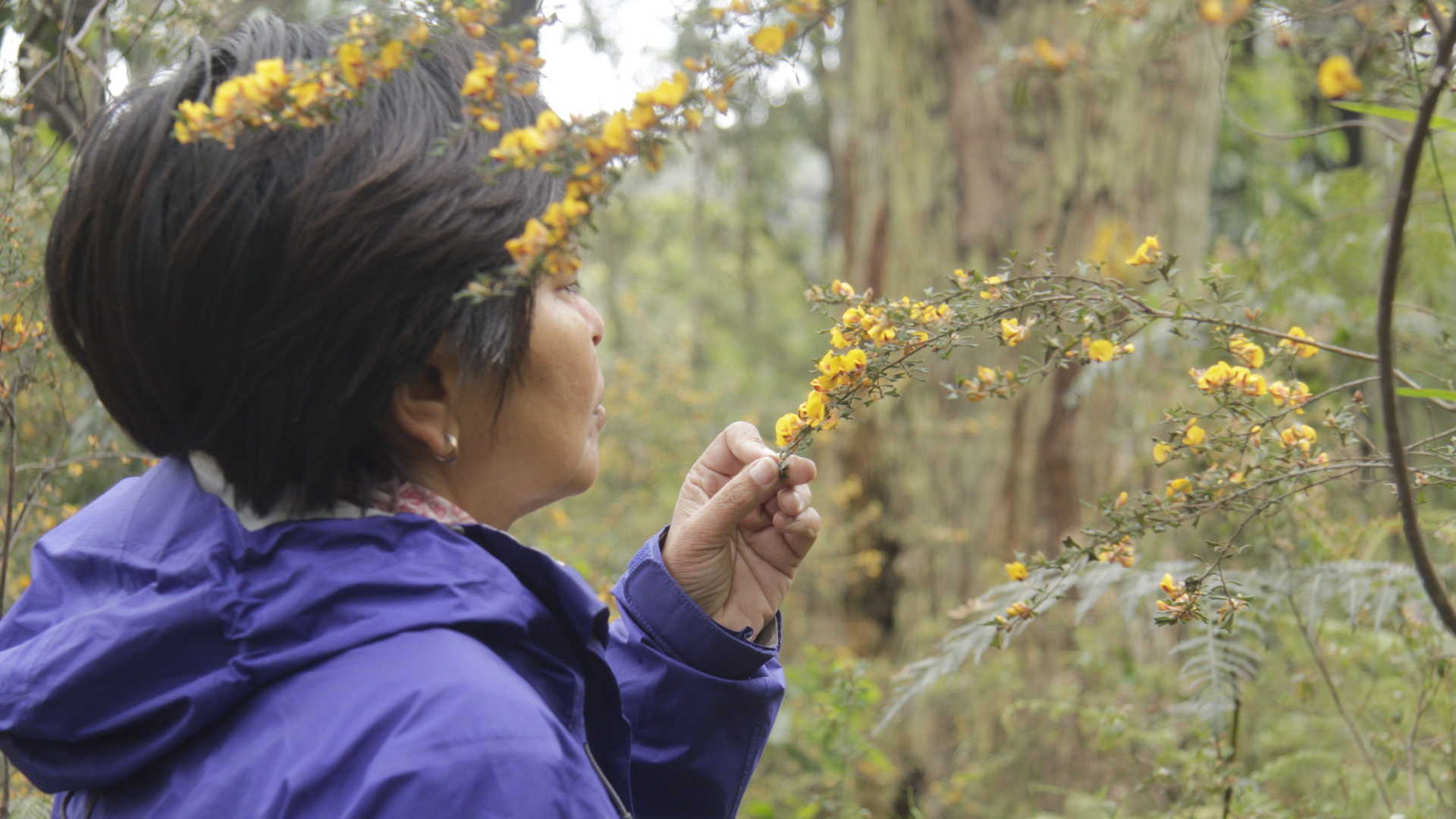
I grew up in Sri Lanka with all the freedom for daily play and discovery outdoors – as I said in a recent interview, there was no such thing as ‘nature deficit disorder’ in my formative years. The ocean was just down the street, where Sunday family picnics were the norm. That love of the ocean, grandparents who loved gardening, and no lack of adventure just outside my door, sealed my connection to nature.
So when I got a chance in 1993 to go on a safari in Rwanda and sit next to a Silver-backed gorilla, I was on top of the world – my ‘Dian Fossey moment!’
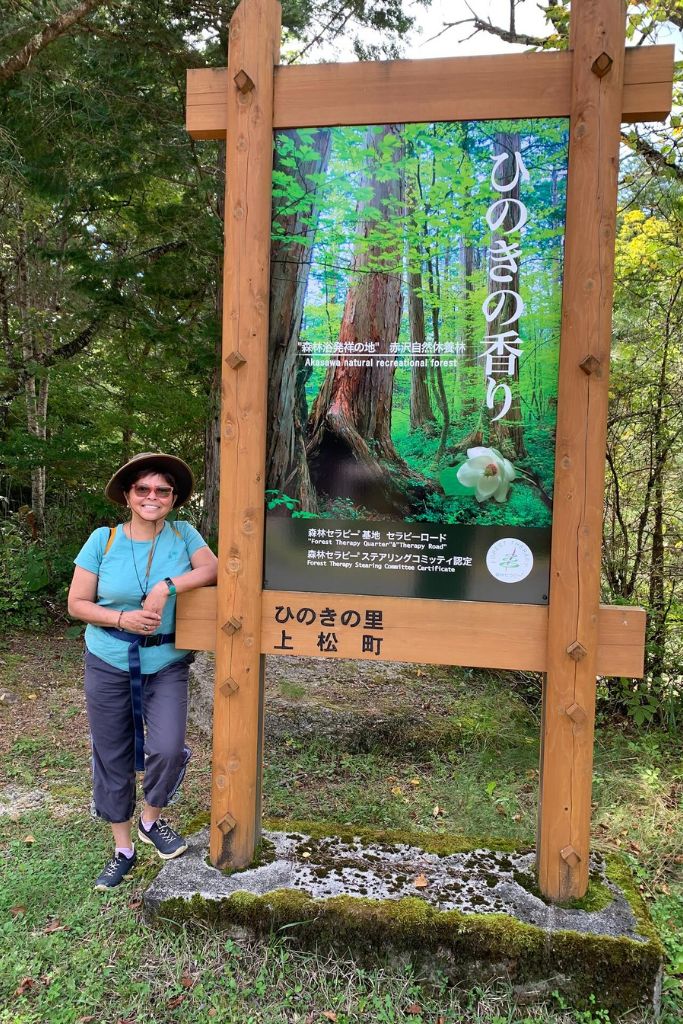
I started hiking in Australia when I migrated in 2010. I had just qualified as a personal trainer, but, I yearned for the freedom of being in nature, away from the confines of a florescent-lit gym. It’s a call we all get at some point in our life, and I was enjoying every minute of raw energy getting to the top of the next hill, pounding my way over kilometers of rugged Australian bush tracks. I even started a hiking meetup group in Melbourne “Happy When I’m Hiking.” That sums it up, doesn’t it? ☺
In 2017, an experience in nature changed the way I related to the healing power of nature. I was in Virginia, celebrating my Mother’s 70th birthday in a lovely house overlooking the Blue Ridge Mountains. Her fondest childhood memories were those spent in nature, so her birthday wish was to do exactly that. We drove along the Blue Ridge Parkway, stopping at many of the lookouts, marvelling at the views, and walking along gentle paths. I was no longer rushing.
As I wandered on the trails, I was inexplicably drawn to a single leaf in the canopy. Bathed in the gentle sunlight that filtered through the dense canopy (the Japanese word for this is “Komorebi”), this leaf’s vivid green hue held me captive.
Within this solitary leaf, I discovered a world of wonder. Its intricate veins, resembling nature’s intricate map, revealed tales of growth and resilience. The gentle serrations along its edges showcased the finest craftsmanship of nature.
While the forest enveloped me with its whispers—the rustling leaves, the soft hum of insects, and the distant calls of birds—it was this lone leaf that anchored me. It instilled patience and served as a reminder to cherish even the smallest moments.
As I continued my unhurried walk, that leaf etched itself into my memory, a testament to the profound impact nature can have on the human soul, urging us to pause and savour its inherent beauty.
This experience sparked a deep curiosity and led me to explore the Japanese practice of Shinrin Yoku, also known as ‘Forest Bathing.’ I yearned to understand more about the therapeutic benefits of immersing oneself in nature, a connection I had felt so deeply during my forest walk. The practice underscored the profound impact of nature on well-being. I was present, looking, touching, tasting and breathing in the forests around me. It made me curious; surely, there must be others that are connecting to nature this way?
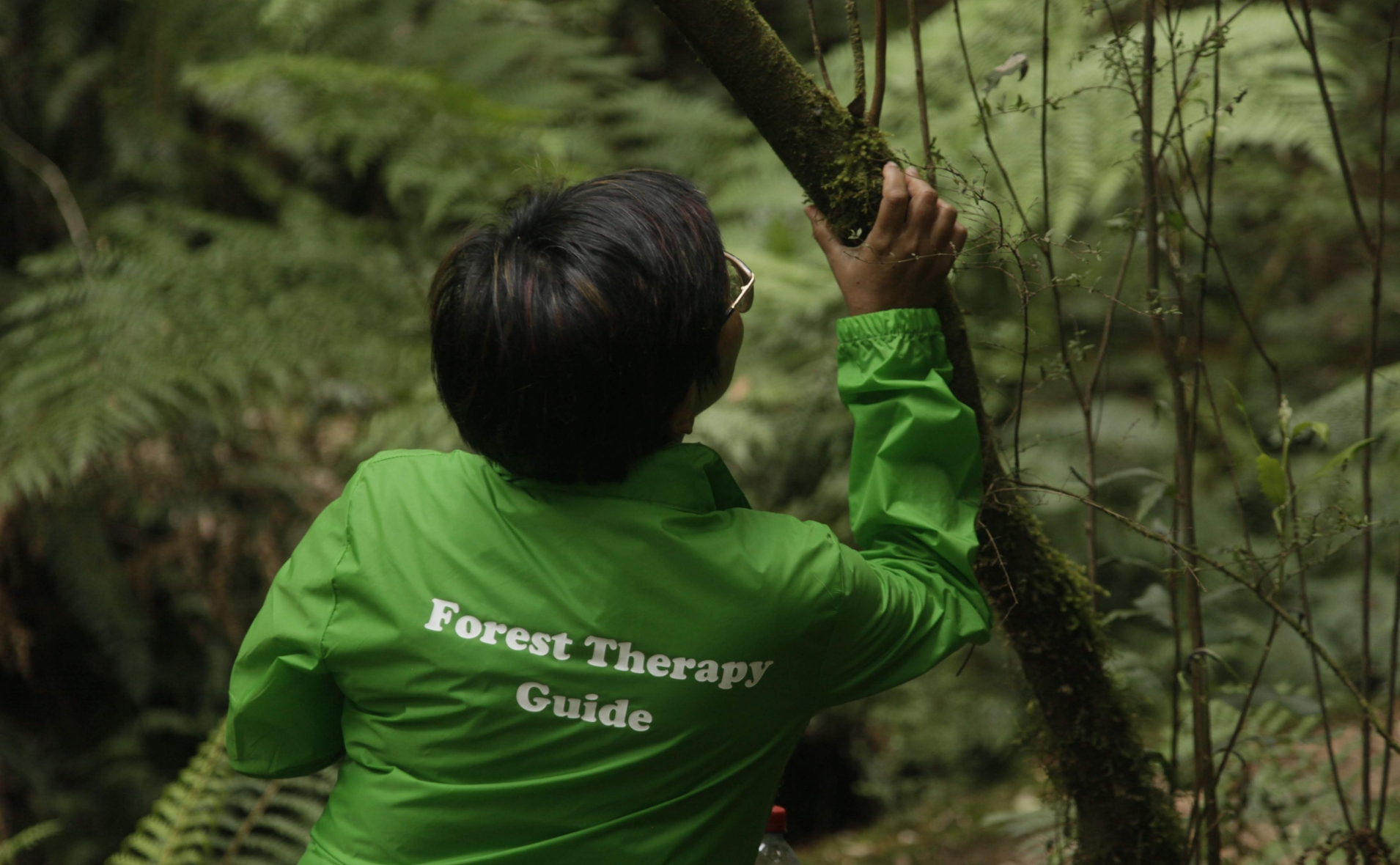
And so my inquiry into ‘Shinrin-yoku’ began, finally finding my way to Japan and the Saneum Recreation Forest in South Korea to meet with the pioneers of Forest Therapy and get certified in “Forest Therapy.”
As the President of the International Nature and Forest Therapy Alliance (INFTA), it is my lifelong mission to lead, mentor and coach as many people to become certified Forest Therapy Guides.
The idea of spending quality time in nature may seem simple, but it is actually quite profound and often life-changing. The Japanese practice of Shinrin-Yoku, or “Forest Therapy” embodies the concept that healing, relaxation and rejuvenation that occurs by immersing oneself in nature. The scientifically-proven benefits of forest therapy include:
- Boosted immune system functioning, with an increase in the count of the body’s Natural Killer (NK) cells
- Regulated blood pressure
- Reduced stress
- Improved mood
- Increased ability to focus, even in children with ADHD
- Accelerated recovery from surgery or illness
- Increased energy level
- Improved sleep
- Improved clarity
If you have any questions about the practice of Forest Therapy or becoming a Forest Therapy Guide, please do get in touch with me at susan@inmynature.life